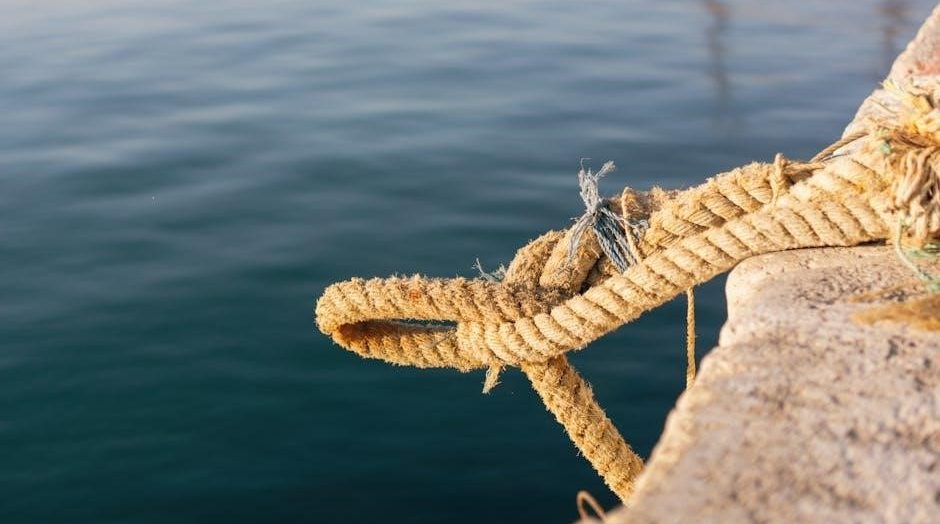
Paracord, initially designed for parachute suspension lines in WWII, has evolved into a remarkably adaptable material. Numerous PDF guides and online resources
detail its diverse knotting applications, ranging from simple survival techniques to intricate crafting projects. Mastering these knots unlocks paracord’s full potential.
What is Paracord?
Paracord, a lightweight yet incredibly strong nylon kernmantle rope, originally served as the suspension lines for parachutes during World War II. The name itself is a contraction of “parachute cord.” Today, it’s celebrated for its versatility and durability, extending far beyond its military origins.
Its construction features a core of seven to nine inner strands (the “kern”) surrounded by a woven sheath (the “mantle”). This design provides a high strength-to-weight ratio. Interestingly, the inner strands can be removed and used separately for finer tasks, effectively multiplying the cord’s utility.
Numerous PDF guides detail the specifications of various paracord types – Type I, II, III (the most common), and IV – outlining their breaking strengths and strand counts. Understanding these distinctions is crucial for selecting the appropriate cord for specific applications, whether it’s crafting, survival, or general utility.
Historical Uses of Paracord
Initially, paracord’s primary function was undeniably military. During World War II, it was integral to parachute systems, ensuring the safe descent of personnel and equipment. Following the war, its robust nature and readily available supply led to its adoption by the US military for a vast array of non-parachute applications.
Soldiers utilized it for securing equipment, repairing gear in the field, creating makeshift shelters, and even medical purposes – stemming from the inner strands’ potential as sutures in emergencies. This adaptability quickly established its reputation for reliability.
Early PDF manuals and training documents from the mid-20th century demonstrate the military’s emphasis on knot-tying skills using paracord. These resources highlighted essential knots for various field tasks. The cord’s widespread use within the armed forces cemented its legacy as a dependable and versatile tool, paving the way for its civilian adoption.
Modern Applications of Paracord
Today, paracord transcends its military origins, finding applications in countless civilian pursuits. From survivalists and preppers to crafters and outdoor enthusiasts, its versatility is widely appreciated. The rise of bushcraft and survival skills movements has fueled a surge in paracord usage, with numerous PDF guides detailing knot-tying techniques for wilderness scenarios.
Beyond survival, paracord is a popular medium for crafting bracelets, keychains, lanyards, and decorative items. Its aesthetic appeal and durability make it ideal for these projects. The crafting community actively shares patterns and tutorials, often available as downloadable PDFs, showcasing intricate designs and knot combinations.
Furthermore, it’s used in pet accessories, gear repair, and even fashion. The accessibility of online resources and the relatively low cost of paracord contribute to its continued popularity and expanding range of applications;

Essential Knots for Beginners
Learning foundational knots is crucial for any paracord enthusiast. Many free PDF guides illustrate these basics, enabling beginners to confidently tackle simple projects and build skills.
The Overhand Knot
The overhand knot, arguably the most fundamental of all knots, serves as a building block for many more complex ties. It’s incredibly simple to create: form a loop with the paracord, then pass the working end through that loop. While seemingly basic, its utility is vast.
Numerous PDF guides dedicated to paracord knots invariably begin with the overhand knot, illustrating its creation with clear diagrams. It’s often used as a stopper knot to prevent a cord from unraveling or slipping through a hole.
However, it’s important to note that the overhand knot significantly weakens the cord’s strength. Therefore, it’s best used for non-load-bearing applications or as a component within a more robust knot structure. Beginners should practice this knot repeatedly to gain proficiency before moving on to more challenging techniques.
The Square Knot (Reef Knot)
The Square Knot, also known as the Reef Knot, is a classic binding knot traditionally used in sailing for reefing sails – hence the name. It’s formed by tying a left-over-right knot, followed by a right-over-left knot. Crucially, maintaining this “left-over-right, then right-over-left” sequence is vital for a secure tie.
Many PDF guides on paracord knots emphasize the Square Knot’s importance for joining two ropes of similar diameter; However, it’s crucial to understand its limitations. It’s not recommended for critical load-bearing applications, as it can slip under strain.
Detailed illustrations in paracord knot PDFs often highlight the potential for the knot to capsize – transforming into a dangerous and unreliable knot if tied incorrectly. Practice and careful attention to the tying sequence are essential for safe and effective use.
The Figure Eight Knot
The Figure Eight Knot is a foundational knot in the world of paracord, prized for its strength and relative ease of tying. It’s created by forming a loop and then passing the working end of the cord around and through the loop, creating a figure-eight shape. This knot is incredibly versatile.
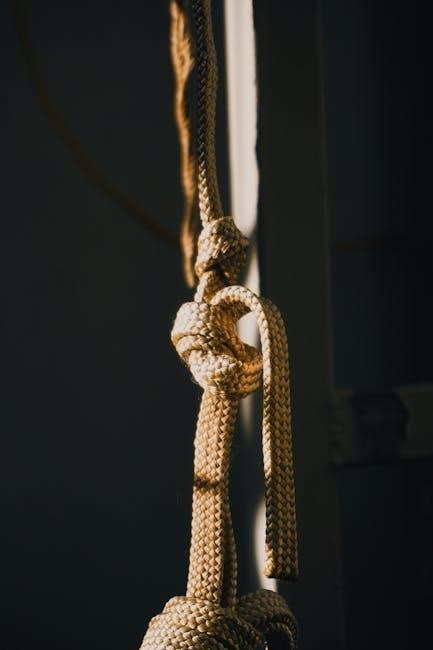
Numerous paracord knot PDF guides showcase the Figure Eight as a stopper knot, preventing a cord from slipping through a hole or device. It’s also frequently used as a base for more complex knots and as a secure attachment point.
Detailed diagrams within these PDF resources demonstrate how the Figure Eight’s symmetrical structure distributes stress evenly, making it significantly stronger and more reliable than some other basic knots. Mastering this knot is a crucial step for any paracord enthusiast.
The Bowline Knot
The Bowline Knot, often called the “King of Knots,” is renowned for creating a fixed loop that doesn’t tighten under strain. This makes it ideal for rescue situations, mooring boats, or any application requiring a reliable, non-constricting loop. Learning the Bowline is a significant milestone for any paracord practitioner.
Many paracord knot PDF guides dedicate substantial space to the Bowline, illustrating its step-by-step construction with clear diagrams. These resources emphasize the importance of correctly forming the loop to ensure its strength and security.
These PDFs often highlight the Bowline’s ability to be easily untied even after being heavily loaded, a critical feature in emergency scenarios. It’s a versatile knot, and mastering it unlocks a wide range of practical applications for your paracord projects.
The Sheet Bend Knot
The Sheet Bend, also known as the weaver’s knot, is a crucial joining knot used to connect two ropes of differing diameters. This makes it exceptionally useful in paracord work, where you might be combining strands of varying thicknesses for projects like lanyards or bracelets.
Numerous paracord knot PDF guides detail the Sheet Bend’s construction, often showcasing variations like the double Sheet Bend for increased security. These guides emphasize the importance of a neat and tidy weave to prevent slippage and ensure a strong connection.
These resources frequently illustrate how the Sheet Bend’s simplicity belies its strength, making it a go-to knot for both practical and decorative applications. Mastering this knot expands your ability to create complex and durable paracord designs, as demonstrated in many downloadable tutorials.
Intermediate Paracord Knots
Expanding beyond basics, intermediate knots like the Diamond and Cobra Stitch are detailed in many PDF guides. These resources showcase complex weaves for advanced paracord projects.
The Diamond Knot
The Diamond Knot, a visually striking and robust knot, is a popular choice for decorative purposes and creating handles or stoppers. Numerous PDF guides and online tutorials meticulously illustrate the step-by-step process of tying this knot, often emphasizing the importance of maintaining consistent tension throughout.
Typically, it requires at least six strands of paracord to form a clearly defined diamond shape, though variations exist. These guides frequently include diagrams and photographs to aid visual learners. Mastering the Diamond Knot requires patience and practice, as precise weaving is crucial for achieving a symmetrical and secure result. It’s often used in projects like keychains, lanyards, and decorative braiding, adding a touch of elegance and functionality.
Many resources also highlight the knot’s historical use in maritime applications, demonstrating its enduring strength and reliability.
The Cobra Stitch (Solomon Bar)
The Cobra Stitch, also known as the Solomon Bar, is arguably the most recognizable paracord weaving technique. Countless PDF guides and video tutorials detail its construction, making it a favorite among beginners and experienced paracord enthusiasts alike. The stitch involves weaving the paracord back and forth, creating a dense, visually appealing braid.
These resources often emphasize the modular nature of the Cobra Stitch, allowing for customization with color changes and variations. Many guides provide detailed diagrams illustrating the weaving pattern, while others offer step-by-step photographic instructions. It’s commonly used for creating bracelets, lanyards, and wraps for handles, offering both aesthetic appeal and functional reinforcement.
The simplicity and versatility of the Cobra Stitch make it an excellent starting point for exploring more complex paracord weaves.
The King Cobra Stitch
The King Cobra Stitch builds upon the foundation of the Cobra Stitch, creating a wider, more substantial braid. Numerous PDF guides and online tutorials demonstrate how to weave a second Cobra Stitch over the first, resulting in a visually striking and robust paracord design. These resources often highlight the increased material consumption compared to the standard Cobra Stitch.
Detailed diagrams and step-by-step instructions are readily available, illustrating the precise weaving pattern required to achieve a clean and even King Cobra Stitch. Many guides emphasize the importance of maintaining consistent tension throughout the process. It’s frequently used for creating thicker bracelets, belts, and decorative wraps, offering enhanced durability and a distinctive aesthetic.
Mastering the King Cobra Stitch requires patience and attention to detail, but the resulting weave is well worth the effort.
The Trilobite Knot
The Trilobite Knot is a visually complex and aesthetically pleasing knot, often favored for decorative purposes like keychains or pendants. Numerous PDF guides and video tutorials break down the intricate weaving process into manageable steps. These resources emphasize the knot’s unique, segmented appearance, resembling the fossilized remains of a trilobite creature.
Learning the Trilobite Knot requires a good understanding of basic knotting techniques, as it involves multiple passes and precise manipulation of the paracord. Detailed diagrams within PDF guides are crucial for visualizing the knot’s structure and ensuring correct execution. Many tutorials suggest using a jig or board to maintain tension and shape during tying.
While challenging, mastering the Trilobite Knot adds a unique and impressive skill to any paracord enthusiast’s repertoire.
The Monkey’s Fist Knot
The Monkey’s Fist Knot is a decorative knot traditionally weighted with a small object, like a marble or bearing, creating a dense, ball-shaped knot. Many PDF guides detail how to create this knot, often illustrating the process with step-by-step diagrams. These resources highlight its historical use as a heaving line weight, aiding in throwing ropes over obstacles.
PDF tutorials emphasize the importance of maintaining consistent tension throughout the tying process to achieve a symmetrical and compact fist. Variations exist, including those designed to hold specific objects securely within the knot’s core. Understanding the knot’s structure is key to customizing its size and weight.
While visually striking, the Monkey’s Fist can be challenging for beginners, requiring patience and practice. Numerous online resources offer supplementary video demonstrations.
Advanced Paracord Knot Techniques
Advanced techniques, often detailed in specialized PDF guides, demand precision and practice. These complex knots elevate paracord work beyond basic utility, showcasing artistry and skill.
The Turk’s Head Knot
The Turk’s Head Knot is a decorative and visually striking knot, often used for creating handles on knives, wrapping steering wheels, or simply as an ornamental element. Unlike many functional knots, its primary purpose is aesthetic, though it can provide a secure grip. Learning this knot often requires following detailed PDF guides or video tutorials, as the weaving pattern can be complex for beginners.
Several variations exist, determined by the number of strands and passes. These variations impact the knot’s size and appearance. Many paracord enthusiasts find PDF resources invaluable for understanding the different techniques and achieving a clean, symmetrical result. Mastering the Turk’s Head demonstrates a significant level of skill in paracord knotting, and it’s a popular choice for advanced projects.
The Spanish Windlass Knot
The Spanish Windlass Knot is a versatile and adjustable knot, primarily used for tensioning lines or creating a makeshift tourniquet in survival situations. Its key feature is its ability to be tightened or loosened easily, even under load. Detailed PDF guides often illustrate the knot’s construction, emphasizing the importance of proper wrapping and securing the final loop.
Understanding the mechanics of the Spanish Windlass is crucial for its effective use. Many PDF resources highlight the potential dangers of improper application, particularly when used as a tourniquet. It’s a knot that demands practice and a thorough understanding of its limitations. While relatively simple in concept, achieving a secure and reliable Spanish Windlass requires careful attention to detail, making visual aids like those found in PDFs extremely helpful.
The Adjustable Paracord Bracelet Knot
Adjustable Paracord Bracelet Knots are popular for creating survival bracelets that can be quickly unraveled in emergencies. These bracelets utilize various knotting techniques, often incorporating a buckle or clasp for secure fastening. Numerous PDF guides detail step-by-step instructions for constructing these bracelets, showcasing different weaving patterns and knot combinations.
The core principle involves creating a woven structure that can be easily undone to yield a significant length of paracord. PDF tutorials frequently emphasize the importance of consistent tension during knot tying to ensure a durable and aesthetically pleasing bracelet. Variations exist, from simple cobra weave bracelets to more complex designs. Accessing a comprehensive PDF resource is invaluable for beginners, providing clear diagrams and explanations of each step involved in creating a functional and stylish adjustable bracelet.
The Lanyard Knot
The Lanyard Knot, also known as a diamond knot, is a decorative and functional knot frequently used to create keychains, pendants, and lanyards. It forms a secure loop that’s visually appealing and relatively easy to tie once mastered. Many PDF guides dedicate sections to this knot, illustrating its construction with detailed diagrams and step-by-step instructions.
These PDF resources often highlight the importance of maintaining consistent tension throughout the tying process to achieve a symmetrical and robust knot. Variations in the number of strands used can alter the knot’s size and appearance. Learning the Lanyard Knot is a great stepping stone for more complex paracord projects. Finding a well-illustrated PDF will significantly aid in understanding the knot’s structure and ensuring a successful outcome, making it a valuable addition to any paracord enthusiast’s skillset.
Paracord Knot Resources & PDFs
Numerous downloadable PDF guides offer comprehensive instructions for various paracord knots. These resources provide visual aids and detailed steps, enhancing learning and project success.
Free Paracord Knot PDF Guides

Accessing free PDF guides is an excellent starting point for learning paracord knots. Many websites dedicated to paracord crafting and survival skills offer downloadable resources covering a wide spectrum of knotting techniques. These guides often categorize knots by skill level, from beginner-friendly options like the overhand and square knot to more complex weaves.
Typically, these PDFs include detailed diagrams, step-by-step instructions, and sometimes even video links for visual learners. Searching online for “paracord knot PDF” will yield a plethora of options. Websites like Paracord Weavers and various survivalist forums frequently host these guides. Remember to verify the source’s credibility to ensure accuracy and safety when attempting new knots. Utilizing these free resources allows enthusiasts to build a solid foundation in paracord knot tying without any initial financial investment.
Online Paracord Knot Tutorials
Complementing PDF guides, online video tutorials provide a dynamic learning experience for paracord knots. Platforms like YouTube host countless channels dedicated to knot tying, offering visual demonstrations of each step. These tutorials are particularly helpful for understanding complex weaves like the Cobra stitch or the Trilobite knot, where visual clarity is crucial.
Many instructors break down each knot into manageable segments, allowing viewers to pause, rewind, and practice at their own pace. Searching for specific knot names alongside “tutorial” will quickly surface relevant videos. Websites like WOE Online Paracord Shop often link to helpful tutorials. Furthermore, interactive online knot tying simulators are emerging, allowing users to practice virtually before attempting the knots with actual paracord, enhancing skill development and reducing errors.
Paracord Knot Apps
Beyond PDF guides and online videos, mobile applications offer a convenient and portable way to learn and reference paracord knots. These apps often feature animated knot-tying instructions, step-by-step diagrams, and searchable knot libraries. Many allow users to zoom in on critical steps and practice virtually, reinforcing understanding.
Some apps include knot quizzes to test knowledge and track progress, while others offer features like knot calculators to estimate paracord length needed for specific projects. While specific app recommendations vary, searching app stores for “paracord knots” will reveal several options. These apps are particularly useful in the field where access to computers or printed materials may be limited, providing a readily available resource for quick knot reminders and troubleshooting.
Recommended Paracord Knot Books
While numerous online resources and PDF guides exist, dedicated books offer a comprehensive and curated learning experience for paracord knot enthusiasts. These publications often feature detailed illustrations, clear instructions, and a wider range of knots than typically found online.
Look for titles specifically focused on paracord knot tying, as opposed to general knot books. Many books also include project ideas, allowing readers to immediately apply their newly acquired skills. Consider books that cater to your skill level, from beginner-friendly introductions to advanced techniques. Physical books provide a tactile learning experience and serve as a reliable reference even without internet access, complementing digital resources like downloadable PDFs and online tutorials.

Paracord Knot Safety & Best Practices
Prioritize secure knot tying and cord integrity for reliable performance. PDF guides emphasize proper technique, material selection, and regular inspection to prevent failures and ensure safety.
Choosing the Right Paracord
Selecting the appropriate paracord is crucial for any project, and numerous PDF guides detail the various types available; Type III 550 paracord is the most common, offering a good balance of strength and versatility, suitable for most knot-tying applications. However, consider the intended use.
For heavier loads or critical applications, higher-strength options like Type IV or even specialized military-grade cords might be necessary. Conversely, for decorative projects or lighter tasks, smaller diameter cords like Type I or II can suffice. Pay attention to the core strands and outer sheath material; nylon is standard, but polyester offers greater UV resistance.
PDF resources often highlight the importance of verifying the cord’s breaking strength and diameter before use. Always choose a cord rated to handle the anticipated stress, adding a safety margin for dynamic loads. Understanding these factors ensures your knots remain secure and your projects are durable.
Maintaining Paracord Integrity
Preserving the strength and reliability of paracord is vital, and many PDF guides emphasize proper care. Prolonged exposure to sunlight, moisture, and abrasion can degrade the nylon fibers, reducing its breaking strength. Store paracord in a cool, dry place away from direct sunlight when not in use.
Regular inspection for signs of wear, such as fraying, discoloration, or stiffness, is essential. Avoid exposing paracord to harsh chemicals or extreme temperatures. When cutting paracord, use a sharp blade to prevent fraying and consider heat-sealing the ends to maintain integrity.
PDF resources often detail cleaning methods – typically mild soap and water – to remove dirt and grime. Remember that repeated knotting and unknotting can also cause wear, so inspect frequently. Maintaining integrity ensures your knots remain dependable over time.
Knot Tying Tips for Strength
Maximizing knot strength is crucial, and numerous PDF guides offer detailed advice. Ensure knots are tied tightly and neatly, avoiding loose wraps or uneven tension. Proper dressing – carefully arranging the strands for a clean look – significantly improves strength. Avoid sharp bends or kinks in the paracord when forming the knot.
Many resources emphasize the importance of leaving sufficient “tail” – the excess cord beyond the knot – to prevent slippage. The appropriate tail length varies depending on the knot and load. Practice tying knots repeatedly to develop muscle memory and consistency.
PDFs often illustrate proper knot-tying sequences. Always test the knot under increasing load before relying on it for critical applications. Remember that a poorly tied knot drastically reduces the paracord’s overall strength.
Common Mistakes to Avoid
Numerous PDF guides highlight frequent errors when tying paracord knots. A common mistake is insufficient tightening; knots must be drawn firmly to prevent slippage under load. Overlooking proper dressing – neatly arranging strands – weakens the knot’s integrity. Many beginners fail to leave adequate tail length, leading to unraveling.
Incorrectly tracing the knot-tying sequence, often found in visual PDFs, is another pitfall. Avoid introducing twists or kinks into the paracord during the tying process, as these create weak points. Failing to identify the knot’s working and standing ends can lead to errors.
Always double-check your work against a reliable diagram or tutorial. Ignoring the knot’s intended purpose and using it beyond its capacity is a dangerous mistake. Practice and patience are key to avoiding these common errors.