KitchenAid Ice Cream Recipe Book PDF: A Comprehensive Guide
Discover a delightful world of frozen desserts! Numerous KitchenAid ice cream recipe resources, often available as PDFs, empower home cooks to craft exceptional treats.
Explore collections featuring basics and advanced techniques, like the Triple Chocolate Ice Cream, ensuring success with your stand mixer attachment.
Find quick, healthy, and easy-to-follow recipes, perfect for any craving, lovingly curated by sources like Stop Restaurant Supply, offering a comprehensive guide.

Embarking on the journey of homemade ice cream with your KitchenAid stand mixer is a rewarding experience, unlocking a universe of flavors and textures unavailable in store-bought varieties. The increasing popularity of KitchenAid ice cream makers, coupled with readily available recipe PDFs, has democratized this once-complex culinary art.
Historically, ice cream making was a laborious process, demanding constant churning and precise temperature control. The KitchenAid attachment simplifies this dramatically, transforming your mixer into a powerful and efficient ice cream machine. The availability of digital recipe books, often in PDF format, provides step-by-step guidance, ensuring even novice cooks can achieve professional-quality results.
These PDFs aren’t merely collections of recipes; they are comprehensive guides, often including troubleshooting tips, cleaning instructions, and insights into the science behind ice cream. From basic custard bases to elaborate flavor combinations, the resources cater to all skill levels. The convenience of accessing these recipes digitally allows for easy printing, bookmarking, and sharing with fellow ice cream enthusiasts. Discover a world where creamy, delicious ice cream is always within reach, thanks to KitchenAid and the wealth of information available online.
Why Use a KitchenAid Ice Cream Maker Attachment?
The KitchenAid ice cream maker attachment transforms your existing stand mixer into a dedicated frozen dessert machine, offering significant advantages over traditional or standalone ice cream makers. Primarily, it leverages the power and stability of your KitchenAid, ensuring consistent churning and optimal texture. Access to numerous recipe PDFs further enhances this benefit, providing a vast library of flavors and techniques.
Unlike many ice cream makers requiring pre-freezing of the entire unit, the KitchenAid attachment utilizes a freezer bowl, simplifying the process. Digital recipe books, readily available as PDFs, often detail precise chilling times and ingredient preparation, maximizing efficiency. This streamlined approach allows for quicker turnaround times and more spontaneous ice cream creations.
Furthermore, the KitchenAid ecosystem offers unparalleled convenience. Utilizing a single appliance for multiple culinary tasks – from baking to ice cream making – saves valuable counter space and reduces kitchen clutter. The abundance of online resources, including downloadable recipe PDFs, fosters a community of KitchenAid ice cream enthusiasts, sharing tips, variations, and inspiring new creations. Enjoy the ease and versatility of homemade ice cream with KitchenAid!
Essential KitchenAid Ice Cream Maker Attachments
The core of KitchenAid ice cream making is the Freezer Bowl Attachment, a double-walled, insulated bowl requiring 24 hours of freezing before use. Many recipe PDFs emphasize the importance of a thoroughly frozen bowl for optimal results. Beyond this, the Coarse Churning Dasher and the Wire Churning Dasher offer varying textures – the coarse dasher for a traditional, slightly coarser ice cream, and the wire dasher for smoother results.
While the basic attachment set is sufficient, additional accessories can elevate your ice cream experience. A second freezer bowl allows for continuous batch making, ideal when following multiple recipes from a PDF collection. Some enthusiasts also utilize the KitchenAid Pasta Roller & Cutter Set to create unique ice cream ribbons or inclusions, inspired by recipes found in specialized digital cookbooks.
Access to comprehensive recipe PDFs often highlights the importance of using genuine KitchenAid attachments for consistent performance and durability. Investing in quality attachments ensures compatibility and longevity, allowing you to fully explore the vast world of homemade ice cream, guided by the wealth of information available in downloadable recipe books.
Understanding the Freezing Bowl
The KitchenAid ice cream maker’s freezing bowl is paramount; recipe PDFs consistently stress its crucial role. This double-walled bowl contains a liquid freezing agent, typically a salt-water solution, that chills the ice cream mixture. Achieving a completely frozen bowl – a full 24 hours in a deep freezer is standard – is non-negotiable for successful ice cream creation.
Many downloadable recipe books detail testing the bowl’s readiness: a slight shake should reveal no sloshing liquid. Insufficient freezing results in a soupy, rather than creamy, consistency. Some PDFs offer troubleshooting tips, suggesting pre-chilling the recipe ingredients to minimize the thawing effect on the bowl during churning.
Understanding the bowl’s capacity is also vital. Overfilling hinders proper churning, while underfilling may not engage the dasher effectively. Recipe PDFs often specify batch sizes tailored to the bowl’s volume. Proper care, including hand washing and avoiding abrasive cleaners, extends the bowl’s lifespan, ensuring years of delicious homemade ice cream, guided by your favorite digital recipe resources.
Basic Custard Base Recipe for KitchenAid Ice Cream
A foundational element in many KitchenAid ice cream recipe PDFs is the classic custard base. This provides a rich, smooth texture superior to simpler recipes. Typically, it begins with tempering egg yolks – gently warming them with sugar to prevent curdling – before slowly whisking in scalded cream and milk.
Numerous downloadable recipe books emphasize low and slow cooking, around 170-180°F (77-82°C), stirring constantly until the custard thickens enough to coat the back of a spoon. This process, often detailed with visual cues in PDF guides, develops a velvety consistency.
Following cooking, the custard must be strained to remove any cooked egg particles and then rapidly chilled – an ice bath is recommended – before churning in the KitchenAid attachment. Many PDFs suggest adding a pinch of salt to enhance flavors. This basic custard serves as a versatile canvas, readily adaptable to countless flavor variations detailed within comprehensive recipe collections.
Chocolate Ice Cream Recipe (PDF Focus)
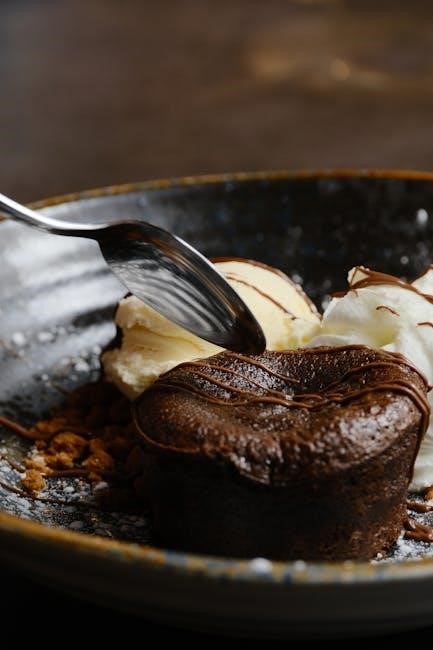
KitchenAid ice cream recipe PDFs frequently showcase chocolate as a star flavor, offering variations from classic dark chocolate to rich, triple chocolate delights. Many downloadable guides begin with the basic custard base, then incorporate high-quality cocoa powder or melted chocolate – often specifying Dutch-processed cocoa for a smoother flavor.
PDF recipes often detail the importance of blooming the cocoa powder in hot cream, intensifying its chocolatey notes. Some guides suggest using both cocoa powder and melted chocolate for a complex profile. The inclusion of a small amount of espresso powder is a common tip found in premium recipe collections, enhancing the chocolate’s depth.
Churning instructions within these PDFs emphasize achieving a soft-serve consistency, followed by hardening in the freezer. The “KitchenAid Triple Chocolate Ice Cream” is repeatedly highlighted as a standout recipe, demonstrating the attachment’s capabilities. Detailed PDFs often include notes on adjusting sweetness and chocolate intensity to personal preference.
Vanilla Ice Cream Recipe (PDF Focus)
KitchenAid ice cream recipe PDFs consistently present vanilla as a foundational flavor, often serving as the base for countless variations. These downloadable resources emphasize the importance of using high-quality vanilla extract or, even better, vanilla bean paste for a superior taste. Many guides detail how to scrape the seeds from a vanilla bean directly into the custard base, maximizing flavor infusion.

PDF recipes frequently highlight the custard-making process, stressing low and slow heating to avoid curdling. Achieving a smooth, velvety texture is paramount, and detailed instructions guide users through tempering the eggs correctly. Some PDFs offer variations using different types of vanilla – Madagascar, Tahitian, or Mexican – each imparting a unique nuance.
Churning instructions within these guides typically advise monitoring the ice cream’s consistency, aiming for a soft-serve texture before transferring it to the freezer for hardening; The simplicity of a well-executed vanilla recipe is often celebrated, showcasing the KitchenAid attachment’s ability to create a classic dessert flawlessly.
Strawberry Ice Cream Recipe (PDF Focus)
KitchenAid ice cream recipe PDFs frequently feature strawberry ice cream, often emphasizing the use of fresh, ripe strawberries for the most vibrant flavor. Many downloadable guides detail methods for preparing the strawberries, including hulling, slicing, and sometimes macerating them with sugar to draw out their juices. This step is crucial for intensifying the strawberry essence.
PDF resources often present options for incorporating strawberry puree directly into the custard base or creating a strawberry ribbon to swirl into the finished ice cream. Some recipes suggest roasting the strawberries beforehand to concentrate their sweetness and add a caramelized note. Detailed instructions guide users through achieving the perfect balance of sweetness and tartness.
Churning instructions within these guides typically advise monitoring the ice cream’s color and consistency, aiming for a beautiful pink hue and a smooth texture. The PDFs often include tips for preventing ice crystals, such as adding a touch of lemon juice or corn syrup. Strawberry ice cream, made with a KitchenAid, is presented as a refreshing and delightful treat.
Fruit-Based Ice Cream Recipes (PDF Sources)
KitchenAid ice cream recipe PDFs extend far beyond strawberry, offering a vibrant spectrum of fruit-based options. Mango, raspberry, peach, and blueberry ice creams are commonly featured, with downloadable guides detailing specific preparation techniques for each fruit. These resources often emphasize using seasonal fruits at their peak ripeness for optimal flavor.
PDF documents frequently include instructions for making fruit purees or compotes, which are then incorporated into the custard base. Some recipes suggest roasting fruits like peaches or plums to enhance their sweetness and complexity. Detailed guides often provide variations, such as adding citrus zest or a splash of liqueur to complement the fruit’s natural flavors.
Sources like recipe websites and dedicated KitchenAid communities compile these PDFs, offering a wealth of options for adventurous ice cream makers. These resources often include tips for adjusting sugar levels based on the fruit’s sweetness and preventing ice crystal formation. Fruit-based ice creams, crafted with a KitchenAid, are presented as healthy and refreshing alternatives.

No-Churn Ice Cream Recipes for KitchenAid
While renowned for its attachment, the KitchenAid stand mixer can inspire no-churn ice cream recipes, often found within comprehensive PDF guides. These recipes bypass the traditional custard base, simplifying the process and reducing cooking time, appealing to those seeking quick frozen treats.
PDF resources detail methods utilizing sweetened condensed milk and whipped cream as the foundation, offering a remarkably smooth texture without the need for churning. Flavor variations are abundant, ranging from classic chocolate and vanilla to more adventurous combinations like salted caramel or coffee. These guides frequently emphasize the importance of thoroughly chilling the mixture before freezing.
Many downloadable recipe collections demonstrate how to adapt traditional ice cream flavors for the no-churn method, providing step-by-step instructions and ingredient lists. KitchenAid enthusiasts share these recipes online, creating a collaborative resource for homemade ice cream lovers. These no-churn options offer a convenient alternative, proving that delicious ice cream is accessible to everyone.
Troubleshooting Common Ice Cream Making Issues
KitchenAid ice cream recipe PDFs often dedicate sections to resolving common problems encountered during the freezing process. A frequent issue is grainy ice cream, typically caused by insufficient fat content or slow freezing; PDFs suggest adjusting the recipe with more cream or ensuring the bowl is thoroughly frozen.
Another challenge is ice crystal formation, addressed by emphasizing rapid freezing and proper storage. Guides recommend pre-chilling the base mixture for at least two hours, and sometimes overnight, to accelerate the process. If the mixture doesn’t freeze, PDFs advise checking the freezer bowl’s temperature and mixer speed.
PDF resources also cover issues like soft or melted ice cream, highlighting the importance of a fully frozen bowl and avoiding overfilling. Many guides offer detailed explanations of how the KitchenAid attachment functions, helping users diagnose and correct issues. Troubleshooting sections often include FAQs and tips for achieving consistently perfect results, ensuring a smooth and enjoyable ice cream-making experience.
Cleaning and Maintaining Your KitchenAid Ice Cream Attachment
KitchenAid ice cream recipe PDFs consistently emphasize the importance of thorough cleaning to maintain hygiene and ensure optimal performance. Most guides detail a specific cleaning process, starting with immediately washing all components – the bowl, dasher, and pouring shield – after each use.
PDF instructions typically advise hand-washing these parts with warm, soapy water, avoiding abrasive cleaners that could damage the surfaces. The freezer bowl requires special care; it should never be put in the dishwasher. Proper drying is crucial to prevent rust or corrosion.
Maintenance tips within these resources often include occasional oiling of the dasher’s moving parts to ensure smooth operation. Recipe books also highlight proper storage, recommending the freezer bowl be stored in a freezer-safe bag to prevent odor absorption. Following these guidelines, detailed in many PDFs, extends the lifespan of your attachment and guarantees consistently delicious results.
Where to Find KitchenAid Ice Cream Recipe PDFs
Numerous online resources offer KitchenAid ice cream recipe PDFs, catering to diverse culinary preferences. A primary source is the official KitchenAid website, often hosting downloadable recipe booklets and guides for their ice cream maker attachment.
Beyond the official site, several food blogs and recipe websites compile collections of KitchenAid ice cream recipes, frequently providing PDF versions for easy access. Websites like Stop Restaurant Supply curate selections, offering both basic and advanced recipes in downloadable formats.
Online marketplaces, such as Amazon and other ebook retailers, also feature commercially published KitchenAid ice cream recipe books available as PDFs. A simple web search using keywords like “KitchenAid ice cream recipes PDF” yields a wealth of options; Remember to verify the source’s credibility before downloading to ensure recipe accuracy and safety. Many user forums also share PDFs amongst enthusiasts.
Popular KitchenAid Ice Cream Recipe Books (PDF Availability)

Several highly-regarded KitchenAid ice cream recipe books are available, with some offering PDF versions for convenient digital access. “150 Delicious, Quick, Healthy, and Easy to Follow Frozen Homemade Recipes for Your Stand Mixer Ice Cream Maker!” is a popular choice, though PDF availability varies by retailer.
While finding direct PDF downloads of entire books can be challenging due to copyright restrictions, excerpts and sample recipes are often available in PDF format on publisher websites and book retailer pages. Searching for specific recipes from these books, like the KitchenAid Triple Chocolate Ice Cream, may yield downloadable PDFs.
Many culinary enthusiasts compile their own digital recipe collections, including recipes inspired by popular KitchenAid books, and share them online in PDF format. Checking online forums and recipe communities can uncover these user-generated resources. Keep in mind that the legality of accessing copyrighted material as a PDF depends on the source and your local laws.
Advanced Techniques: Flavor Variations & Mix-Ins
Beyond basic custard bases, mastering flavor variations elevates KitchenAid ice cream making. Many recipe books, and accompanying PDFs, detail techniques for infusing flavors – steeping spices in the custard, creating fruit purees, or utilizing extracts for intense tastes.
Mix-ins are where creativity truly shines. Consider adding chopped chocolate, nuts, cookies, or swirls of caramel. The timing of addition is crucial; some mix-ins are best incorporated during the last few minutes of churning to maintain texture. PDFs often showcase specific mix-in ratios and preparation methods.
Experiment with layering flavors and textures. A ribbon of fruit compote, a sprinkle of brittle, or a dusting of cocoa powder can transform a simple ice cream into a gourmet delight. Explore resources offering advanced techniques, often found within comprehensive KitchenAid recipe collections available as PDFs, to unlock a world of possibilities.