
The Nikon FM2 is a legendary manual-focus 35mm SLR, celebrated for its robust build, precision, and timeless design. This instruction manual guides users through setup, operation, and maintenance, ensuring reliable performance for photographers seeking classic craftsmanship for all levels now.

Physical Overview
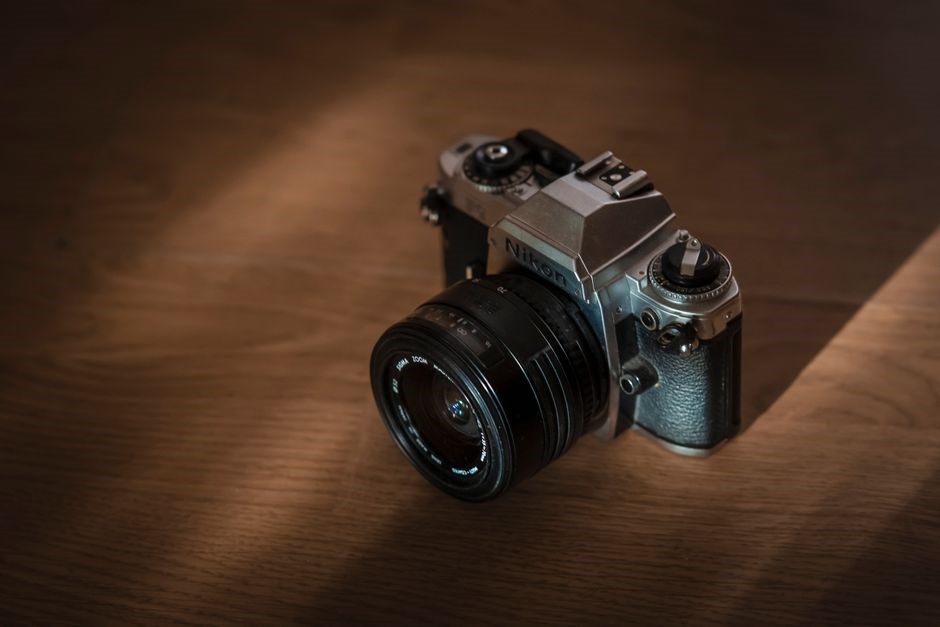
The Nikon FM2 features a rugged magnesium alloy body, compact dimensions, and a classic manual focus system. Its ergonomic grip, durable shutter, and precise controls make it ideal for both beginners and professionals seeking reliable, timeless performance. Enjoy shooting!
Body Design
The FM2’s body showcases Nikon’s commitment to durability and precision. Constructed from a lightweight yet sturdy magnesium alloy, the camera’s chassis offers resistance to impact while maintaining a manageable weight for handheld use. The matte finish not only reduces glare but also provides a tactile feel that signals quality. Ergonomically, the grip is contoured to fit a range of hand sizes, ensuring a secure hold during extended shooting sessions. The top plate features a clear, well‑spaced layout of the shutter speed dial, aperture ring, and exposure lock button, all of which are engineered for smooth, precise operation. The viewfinder is a bright, 0.72× optical pentaprism that delivers a clear, natural image with minimal distortion, making manual focusing reliable and comfortable. A dedicated shutter release lever is positioned for easy access, while the camera’s robust construction ensures that the internal mechanisms remain protected from dust and moisture. The FM2’s design also incorporates a convenient quick‑access front plate, allowing photographers to attach accessories such as remote triggers or external flashes without compromising the camera’s balance. Overall, the body design balances form and function, delivering a camera that feels solid, responsive, and ready for any shooting scenario. Its compact dimensions, measuring 138 mm in length, 92 mm in width, and 52 mm in height, make it highly portable, while the 1.4 kg weight keeps it light enough for handheld use without sacrificing stability. The camera’s balanced weight distribution ensures that the front of the body does not feel front‑loaded, allowing photographers to maintain a natural shooting posture during long sessions. With its reliable mechanical shutter and a 1/2000 s maximum speed, the FM2 delivers crisp images even in bright light, while its 1/125 s flash sync allows for versatile flash photography. The camera’s robust design also makes it a favorite field photographer demanding durability, a dependable performance.

Power and Batteries
The Nikon FM2 operates on a single AA battery, offering reliable power for manual exposure. Its efficient design ensures extended shooting sessions, while the battery compartment is easily accessible for quick replacements, keeping your camera ready for action. Keep shoot
Battery Types
The Nikon FM2 is a manual‑focus 35mm SLR that balances simplicity and performance. It accepts any standard AA battery, delivering reliable power for shutter, metering, and viewfinder illumination. Its efficient design supports long shooting sessions.
Alkaline cells are common for casual use, offering long shelf life and high initial voltage. Rechargeable Ni‑MH batteries provide consistent power, lasting longer under heavy use. Both types support the FM2’s efficient shutter and metering, making it ideal for varied shooting conditions. They also keep voltage steady across temperature in shoots!
When selecting a battery, consider the following factors:
- Capacity (mAh) – Higher capacity cells will keep the FM2 running longer between charges or replacements.
- Temperature tolerance – Some batteries perform poorly in extreme cold or heat; choose a model rated for a wide temperature range if you’ll shoot outdoors.
- Brand reputation – Stick with reputable manufacturers to avoid cells that may leak or fail prematurely.
To extend battery life, use the camera’s auto‑power‑off feature, which shuts the unit down after a period of inactivity. Additionally, keep spare batteries on hand, especially during long trips or events, and always carry a charger for Ni‑MH cells. Proper battery maintenance not only ensures reliable operation but also protects the FM2’s delicate electronics from voltage spikes and power surges. Enjoy the experience.

Focusing System
The Nikon FM2 employs a classic manual focus mechanism, offering photographers full control over depth of field and composition. Its focus ring turns smoothly, with a clear, tactile feel that allows precise adjustments even in low light. The camera’s focusing screen, mounted behind the viewfinder, displays a bright, high‑contrast grid that aids in aligning subjects and achieving sharp focus. The FM2’s focusing system is compatible with a wide range of Nikon manual lenses, from wide‑angle to telephoto, and supports both single‑shot and continuous focus modes. When using a 1:1 magnification viewfinder, the photographer can lock focus with the camera’s focus lock lever, ensuring consistent framing during rapid shooting sequences. For macro work, the FM2’s internal focusing screen can be swapped for a macro‑specific screen, providing a magnified view that simplifies close‑up work. The camera’s focusing system also includes a built‑in depth‑of‑field preview button, allowing the user to see the effect of aperture changes before exposure. This feature is invaluable for portrait and landscape photography, where depth control is critical. The FM2’s robust build ensures that the focusing ring maintains its alignment over time, reducing the need for frequent recalibration. In addition, the camera’s focus‑lock lever can be used to lock the focus during exposure, preventing accidental focus shifts. Overall, the Nikon FM2’s focusing system delivers a blend of reliability, precision, and versatility that appeals to both amateur and professional photographers alike. Its mechanical shutter offers speeds from 1/2000s to 30s, construction ensures operation in harsh environments, making it a favorite among photographers

Shutter Mechanism
The Nikon FM2’s shutter mechanism is a classic focal‑plane design that delivers reliable performance across a wide range of speeds. The camera features a 1/2000‑second top speed, with a gradual acceleration from 30‑second exposures to 1/2000‑second bursts. The shutter is driven by a robust, dual‑spring system that ensures consistent timing and minimal vibration. The FM2’s shutter assembly is constructed from high‑strength alloy, providing durability for years of use. The camera’s shutter release lever is ergonomically placed, allowing quick, one‑hand operation. The shutter’s mechanical precision is maintained through a series of finely machined gears and a tension‑adjustable spring that can be fine‑tuned by a professional service technician. The FM2 also includes a shutter‑speed dial that is fully integrated with the camera’s exposure system, allowing the user to set a desired speed without the need for external metering. The shutter’s design incorporates a silent‑mode feature, which reduces noise to a minimum during exposure, making it suitable for discreet shooting situations. The shutter’s reliability is further enhanced by the camera’s internal safety lock, which prevents accidental triggering when the camera is not in use.The shutter’s design also supports a silent‑mode option, reducing noise to a minimum during exposure and making it suitable for discreet shooting. Its reliability is further enhanced by an internal safety lock that prevents accidental triggering when the camera is not in use
Exposure Settings
The FM2 offers manual control of shutter speed, aperture, and ISO. Adjust the dial for speed, use the aperture ring on lenses, and set ISO via the camera’s range. Exposure is calculated by the photographer, with no auto‑metering. No flash required. Use a tripod for long.

Aperture Control
The Nikon FM2’s aperture control is handled entirely by the lens’s aperture ring, offering photographers manual precision. Each lens features a clear, tactile ring with a range of f‑stops marked in a consistent, easy‑to‑read format. To change the aperture, simply rotate the ring clockwise or counter‑clockwise until the desired f‑number aligns with the camera’s viewfinder reference line. The FM2’s viewfinder displays the selected aperture as a bright, centered dot, allowing for quick confirmation without looking away from the scene. Because the camera lacks an electronic aperture sensor, the photographer must rely on the lens’s mechanical indexing; this ensures that the aperture setting will remain accurate even in low‑light or high‑contrast situations. When paired with a lens that offers a wide aperture range, the FM2 allows for depth‑of‑field control, enabling depth for portraits or wide depth for landscapes. Additionally, the FM2 is compatible with a variety of Nikon F‑mount lenses, including older manual lenses that may have unique aperture markings. In such cases, the photographer should consult the lens manual to confirm the correct aperture values. For optimal exposure, remember to balance the chosen aperture with the selected shutter speed and ISO setting, as the FM2 does not provide automatic exposure compensation. Bymastering the aperture ring, users can achieve precise control over exposure, depth and of field, and bokeh making the FM2 a reliable tool pro for professionals.

Flash and Accessories
The Nikon FM2 supports bothbuilt‑inand externalflash units, offering flexibility forawide-range ofshootingscenarios. The camera’s hot‑shoe accepts any Nikon F‑mount flash, while the rear‑viewfinder includes a 1/8‑second flash sync. For optimal performance, use a flash with a built‑in guide number that matches your desired aperture and ISO. The FM2’s shutter speed must be set to 1/200 s or faster to avoid flash cut‑off. If you prefer a portable solution, the built‑in flash works for close‑up or indoor shots, but a higher ISO or wider aperture is needed for now. Always ensure that the flash’s power setting is compatible with the camera’s sync speed, and remember to keep the flash’s lens cover clean to maintain accurate exposure. By mastering flash techniques and pairing the FM2 with the right accessories, you can capture dynamic, well‑lit images in any environment. Additionally, a wireless trigger system allows you to control the flash remotely, which is especially useful for event photography or when the camera is mounted on a tripod. A dedicated battery pack for the flash ensures continuous power during long shoots, and a spare battery for the camera is always recommended. Using a light meter can help you fine‑tune exposure, ensuring balanced highlights and shadows. Finally, keep your flash’s contacts clean and periodically check the flash’s internal battery to prevent unexpected power loss during critical moments.
Keep the FM2 very clean by wiping the shutter, mirror, and viewfinder with a cloth!. Inspect the shutter; sticky feel indicates wear. Replace batteries promptly. If the shutter fails, check the release lockand ensure the mirror isup. For focus problems, clean the lens mount and verify the focus ring!.
Common Issues
Common operational problems with the Nikon FM2 often stem from mechanical wear, dust accumulation, or user error; The most frequent issue is a sluggish shutter release, which may be caused by a worn shutter spring or a dirty shutter release lever. Users should inspect the shutter mechanism for any visible debris and clean with a soft brush. Another common problem is the shutter not firing properly, which can result in a delayed exposure or a complete failure. This usually occurs when the shutter spring is weakened or the release lever is jammed. Regular cleaning of the shutter release lever and ensuring the spring tension is within spec can prevent this issue. If the camera fails to expose, check the shutter speed dial for any misalignment. A bent or damaged speed dial can cause the camera to lock at a fixed setting, leading to underexposure. Battery issues are common, especially with older units. A weak battery can cause the shutter to lag or the meter to read incorrectly. Always use fresh batteries and check the battery contacts for corrosion. If the meter is stuck at a particular setting, try a different battery or reset the meter by cycling the power. The FM2’s mechanical shutter is rated for 100,000 cycles, but real-world use can reduce that lifespan. Inspect the shutter for wear marks, and replace the shutter assembly if the shutter fails to return to the fully closed position. A broken or misaligned shutter can ruin exposure accuracy. Regular maintenance extends FM2 life, ensuring performance always

Storage and Transport
Proper storage and transport of the Nikon FM2 preserve its mechanical integrity and optical performance. When not in use, place the camera in a padded, dust‑protected case that fits snugly around the body. The case should have a removable soft lining to prevent scratches and a secure closure to keep the camera from shifting. Before traveling, clean the camera’s exterior with a microfiber cloth and ensure all lenses and accessories are properly attached or stored in their own padded compartments. Use a lens cap and a filter cap to shield the glass from dust and moisture. The FM2’s mechanical shutter and film transport system are sensitive to vibration; therefore, during transport, secure the camera in a padded bag or case that absorbs shock. If you are carrying the camera on a tripod, use a strap or a tripod bag that distributes weight evenly and prevents sudden jolts. When packing lenses, use lens pouches with foam inserts to protect against impact. Keep the battery compartment closed and, if possible, remove the batteries to prevent accidental discharge or corrosion. For extended travel, consider a dedicated camera bag with adjustable compartments and a padded interior to accommodate the FM2, lenses, and accessories. Finally, perform functionality check before leaving camera in bag: confirm that the shutter releases, viewfinder focus, and metering system are operational. This routine inspection helps detect any issues that may arise from handling or environmental exposure carefully!!
Its enduring legacy proves that simplicity and precision can coexist, inspiring photographers wi